How I Do a 30-Hour Fast
About 40% of Americans are diabetic or prediabetic. This is caused mostly by eating too many dense carbs which cause you to be more hungry for more of them the next day (some say diabetes should be called carbohydrate poisoning like how too much lead causes lead poisoning), and by eating too frequently.
Most common reasons we eat something:
1. I'm bored. I want a dopamine hit.
2. I'm tired. Food will wake me up.
3. I'm stressed. *Habitually grab something*
4. I want to avoid my next task at work. Snack break!
5. This food will go bad if someone doesn't eat it.
...big gap...
6. I'm actually hungry and haven't eaten enough.
Step Zero: Skip all breakfasts.
First I had to get used to fasting a few hours every day in the morning. I wouldn't be able to suddenly do a 30 hour fast until I got used to not eating breakfast. If you eat breakfast every day your body is too used to breaking-fast all the time.
It took me a few days of feeling hungry and irritable while working and stomach growling from 9 to 11 am but then it became easy. I'm able to work fine in the morning and no stomach problems.
Fasting Step 1: Eat lunch Saturday at 2pm.
On Saturday I eat breakfast at 11 then lunch at 2. The goal is to not eat again until Sunday at 8pm for dinner. That's a 30 hour fast.
I do this on the weekend because if I'm working on a weekday I tend to hit a hard problem at work then I want to eat because it's too stressful and I need to get work done but this damn fast is getting in the way.
If you treat it like a religious experience then you don't get irritable. It's like going in a sauna. Great if you decided to go in. But if you're in because someone else said you have to, or if you're trying to get your normal work done in there, you'd just be upset the whole time at how hot it is in the room.
Fasting Step 2: Skip dinner, and see if I can sleep.
If I can sleep Saturday night without dinner then I continue the fast and go for 30 hours.
If I'm too hungry to sleep then I give up and eat, and I'll try again next weekend instead. Or if someone unexpectedly comes over and wants to eat with us, or wants to do a big hike, I'll just skip the fast. I don't need to upend my life to force it to work every weekend. As long as it works out at least once a month I'm good.
Fasting Step 3: Do chores, sip on water.
On Sunday I sip on some water with a some lemon and a bit of salt. This provides electrolytes and makes me feel like I'm not fasting.
If I find myself sitting around feeling hungry and looking at the clock, I get up and do chores. Not stressful chores. No complex decisions to make. I always end up forgetting that I was ever hungry at all.
Done! Eat dinner Sunday at 8pm.
A normal dinner. No sudden revenge eating. Could be less food acutally if I feel my digestive system has simply turned off and doesn't want to wake up yet.
Result 1: Not bloated at all.
I used to feel full but want to keep eating anyways, then feel super full all day. Also very gassy all the time.
Result 2: Don't need to snack anymore.
I can just do 2 meals a day if I want.
Result 3: Better sleep.
Before I started intermittent fasting, I had to eat soon before bed. If I didn't eat enough I'd feel hungry when trying to fall asleep, then I can't sleep. So I'd get up and eat then be awake far too late.
And as everyone always says, when you eat before bed you sleep worse.
Result 4: I exercise more.
When I used to snack frequently I wouldn't want to exercise often because if I just ate then I'd want the food to settle first. The problem is there's a narrow window after food settles before I'd eat again.
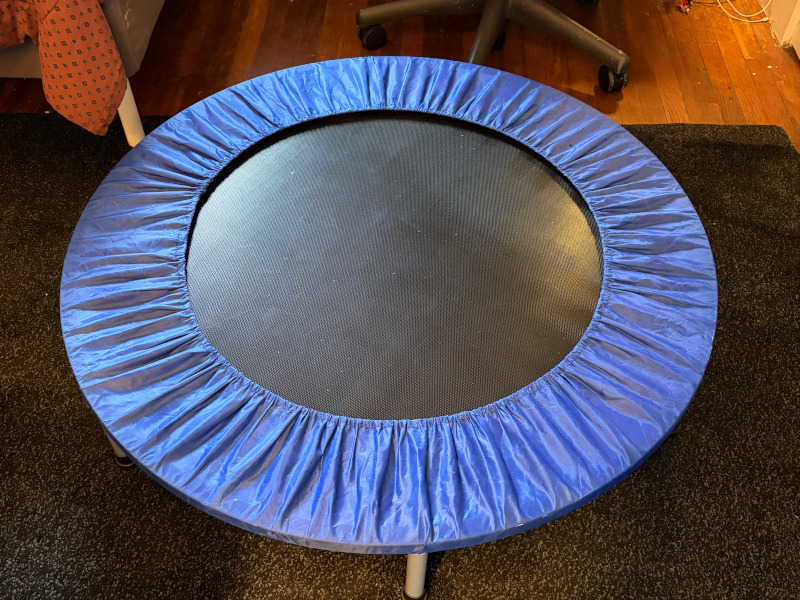
Now I have a mini trampoline by my desk and I jump all the time! No food sloshing in my stomach when I try to jump.
Result 5: Calmness.
So far I think all these benefits are just physical. Maybe this one is too. Maybe the inflammation from digesting was causing my hands and feet to be tense all day for no reason. Or maybe just the practice of mental discipline of not eating makes me more calm and collected in general.
Some people get a calmness that they call keto zen when they don't eat carbs. I feel this too because I cut most carbs when I solved my IBS.